It's been almost a year, which is ridiculous. I'm sorry if I've let anyone down.
I think it's time for me to declare Dust & Corruption closed, for now. If anyone wants to hop in and take over, please leave a comment or contact me.
So much in my life has changed in the last few years...loss of a job, loss of a parent, my childhood home, the only home I'd ever known, being sold. At the same time, I've got a great new job with people I like, and am moving my life in new and different directions. I also started on anxiety medications after a bad depressive spell in summer of 2018, and they really seem to be working for me.
My reading tastes are still the same. I'm still very much the same person I had been in many ways. But I'm finding other interests in life, and making new goals. I'm in poor condition physically and am starting a program to get in better shape. I've taken up canning and making my own liqueurs, and have been dabbing my toes in the maker world.
I may come back to this at some point. I may move on to other things. Time will tell.
So with a touch of sadness, I declare Dust & Corruption closed.
Thank you,
Mike
Monday, January 6, 2020

Monday, May 6, 2019
May in the Phantom Concert Hall!

The star of the program is this piano concerto by Ferdinand Ries (1784-1838), a Romantic composer who was a student of Beethoven, and someone I only recently became aware of. And we're all about the Romantics here, aren't we? After all, Gothic is an offshoot of Romantic...
Anyway, here's his lovely Piano Concerto No. 8!
Quite a work, eh? You'll be sure to hunt down his other works. It's fun discovering a composer you never knew...
Anyway, the concert's over, let's go and have a drink, shall we?
Tuesday, April 30, 2019
Happy Walpurgisnacht! Now we are 11!

More to come in May! I hope everyone is having a good night...I wish I could go out, but I'm dealing with a sinus infection, plus I'm broke, so instead I'm staying in...
Sunday, April 21, 2019
Whew...a few recent reads
Sorry to be dragging this month. I've been mentally and physically drained by various goings-on. I decided to skip the monthly musical interlude and go straight into some reviews...
 This is an omnibus collection; the first part is by Louisa Baldwin, and the second by the lesser-known Lettice Galbraith. Neither had enough to warrant their own volumes, so they went with one.
Baldwin's The Shadow on the Blind has a few highlights; the title story has some eeriness and menace to it, but at the end people's reactions to the haunting seem overblown. "The Weird of the Walfords" was pretty interesting as the heir to a manor house is determined to not fall victim to an ancestral curse, and the measures he takes are a bit surprising considering the Victorian origin of the tale. And "The Real and the Counterfeit" is a memorable Christmas horror story.
But...the rest of it is rather unmemorable and predictable, and sometimes the sentimentality is laid on a bit thick. "How He Left the Hotel" and "The Empty Picture Frame" depend on revelations that experienced readers see coming a mile away. "The Uncanny Bairn," "Many Waters Cannot Quench Love," and "The Ticking of the Clock" are simply too sentimental. "Sir Nigel Otterburne's Case" has some interesting macabre elements, but in the long run is unremarkable in execution.
Little is known of Lettice Galbraith, aside from that she published two story collections and a novel in the mid-1890s and then nothing more was heard of her. The Trainer's Ghost is a very Victorian collection...but with a slightly harder edge. Sadly, much of it is unmemorable, but it has its moments. "The Case of Lady Lukestan" has a heartless woman getting her just deserts from a ghost, and "In the Seance Room" is delicately brutal in its depiction of a harsh man's confrontation with the shade of an abused wife. Others, like the title tale and "The Ghost in the Chair" and "The Missing Model" are unremarkable tales, save for their Victorian atmosphere.
This is a good collection for folks who like Victorian ghost stories, but it's a relatively unremarkable one, with no real ground broken and little to linger in the memory.
 Birkin's Spawn of Satan suffers no Victorian delicacy. From 1970, this deals with modern horrors and surprisingly little of the supernatural. The title story may make you think of demonic terrors, but it's more a conte cruel about an idealistic mixed-race couple in a small conservative town and the buildup to acts of violence and revenge. "Wedding Presents" gives us a vicious murder and the murderer's attempts to cover the truth, in a story that would have been a perfect episode of "Alfred Hitchcock Presents." And most of the stories are along that vein, tales of hatred and cruelty, and of their tendency to self-destruct, to the point that it becomes rather unpleasant reading. I had to put it down and walk away a few times. A little Birkin goes a long way.
Hope everyone's spring is going well, and you filed your taxes on time!

Baldwin's The Shadow on the Blind has a few highlights; the title story has some eeriness and menace to it, but at the end people's reactions to the haunting seem overblown. "The Weird of the Walfords" was pretty interesting as the heir to a manor house is determined to not fall victim to an ancestral curse, and the measures he takes are a bit surprising considering the Victorian origin of the tale. And "The Real and the Counterfeit" is a memorable Christmas horror story.
But...the rest of it is rather unmemorable and predictable, and sometimes the sentimentality is laid on a bit thick. "How He Left the Hotel" and "The Empty Picture Frame" depend on revelations that experienced readers see coming a mile away. "The Uncanny Bairn," "Many Waters Cannot Quench Love," and "The Ticking of the Clock" are simply too sentimental. "Sir Nigel Otterburne's Case" has some interesting macabre elements, but in the long run is unremarkable in execution.
Little is known of Lettice Galbraith, aside from that she published two story collections and a novel in the mid-1890s and then nothing more was heard of her. The Trainer's Ghost is a very Victorian collection...but with a slightly harder edge. Sadly, much of it is unmemorable, but it has its moments. "The Case of Lady Lukestan" has a heartless woman getting her just deserts from a ghost, and "In the Seance Room" is delicately brutal in its depiction of a harsh man's confrontation with the shade of an abused wife. Others, like the title tale and "The Ghost in the Chair" and "The Missing Model" are unremarkable tales, save for their Victorian atmosphere.
This is a good collection for folks who like Victorian ghost stories, but it's a relatively unremarkable one, with no real ground broken and little to linger in the memory.

Hope everyone's spring is going well, and you filed your taxes on time!
Sunday, March 17, 2019
Two Recent Reads

It's interesting to read the first book of the series; I've read a few others...Calamity Town, Cat of Many Tails, and And on the Eighth Day (which was partly ghostwritten by Avram Davidson)...and those had really literary depth, especially the third which functioned as both a detective story and a religious allegory. As the series progressed, the authors grew less obsessed with contrived plots and technical puzzle mysteries and the stories became more naturalistic and character-driven.The main character became more human and humane, and his wife and child were dropped from the narrative with no explanation.
The Roman Hat Mystery is out there in paperbacks and also as an ebook; it's an interesting historic curiosity, but I wouldn't recommend going out of your way for it.

There's an odd air of finality about this book, as a couple of ongoing subplots in the series are resolved...one long-simmering love affair takes off, while another love affair ends, and a likable character leaves. And Bryant is starting to develop Alzheimer's and his normally labyrinthine brain becomes foggier and foggier. However, there are more in the series, thank goodness, but I wonder if Fowler was considering ending things there.
As always with Fowler, this is Require Reading.
Wednesday, March 6, 2019
A March Evening at the Phantom Concert Hall

The program brings stirrings of spring to our souls, thank goodness, and lets us put the difficulties of February behind us. Including some Vivaldi, because spring isn't complete without Vivaldi.
Sorry to be away, folks, I had a rough month, in between the mopes and some minor medical issues. I'll be around more, promise!
Sunday, February 10, 2019
February at the Phantom Cabaret!

Tonight, we're heading off to that little cabaret we know...you have to duck down a dark passageway between two buildings, and emerge in a beautifully appointed space, full of atmospheric lighting and comfortable seats, where the drinks are good and the music even better.
Tonight, we're hearing the Eastern European band Fishtank!
Sorry I've been slow to post again. My computer crashed and it took me a few days to reload Windows and while I was able to save my personal files, I had to reload all my programs. I'm a bit nervous about still working with this thing but I'm in no position to buy a new one, so here I am...
Don't worry, it's onward and upward!
Monday, January 21, 2019
Catching up on recent stuff...
OK, I haven't been a very good correspondent. I'm trying to get caught up now and here's a few things I've read lately....
 The second volume of her Henry and Emmy Tibbett series, Down Among the Dead Men is a solid if unremarkable mystery novel. Henry and Emmy are on holiday again, visiting some friends for a sailing vacation in the seaside hamlet of Berrybridge Haven. They get involved with the local weekend sailing community, get to know the locals, and hear a tale of a somewhat mysterious death that happened some time ago. But then there's some tensions, some strangeness, and another murder. Who did it, and why? It all wraps up nicely, if a bit sadly; it's a tale of a somewhat minor crime that snowballed into some bigger ones. It's a pleasant read, with well-drawn characters, a good plot, and a setting that reminded me of some of the waterside towns on the Chesapeake that I've visited. You can always count on Patricia Moyes.
 Now THIS is a classic. Cornell Woolrich's The Bride Wore Black is simply amazing. A beautiful woman works her way into the lives of a series of men, and kills them all in various ways. It's sheer noir delerium, one of the great examples of dark pulp noir fiction out there. It inspired a Francois Truffaut film, starring Jeanne Moreau...but if you like the movie, prepare yourself, because the movie makes a substantial change to the story, changing the nature of the crime that started her spree, and a devastating final twist is cut that changed everything. I had read the novel first and found the movie disappointing....but I have friends who saw the movie first and found the book a disappointment, so your actual mileage may vary. I find the book superior and I'm glad I've managed to hang on to it all these years....I first read it as a high-school student back in the 80s, and I was pleasantly surprised to see I still had it when I moved.
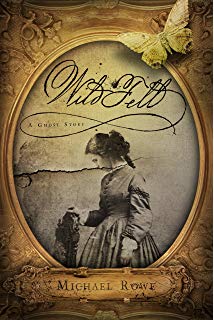 Michael Rowe's Wild Fell was simply infuriating for me. Parts of it are excellent, as it describes the narrator's boyhood and experiences that led to him buying an old house on an island on a lake in Canada. It goes fairly leisurely for a while, but I didn't mind, as there were hints of menace in the story and in a prelude about the house...but then in the last chapter everything seems cranked up to 11 and revelations come so rapidly that it's hard to keep track, and it's unclear if we're supposed to take them as literal truth or just lies. It reads as if the author had come to his page limit and had to wrap everything up in a hurry. If it had simply been bad, I could have wiped my hands and walked away, but in this case, Rowe has genuine grace as a stylist...but I felt his plotting needed work. A lot of work.
So, that brings me a few steps closer to being up to date...more to come....


So, that brings me a few steps closer to being up to date...more to come....
Sunday, January 6, 2019
A New Year in the Phantom Concert Hall!

Nevertheless, we're now facing both the promise of a new year, and the dread of getting back to our normal lives and work schedules. But, for tonight, we're going to enjoy a new year's concert by the local orchestra...and here's one piece, the "Lola Montes Polka"!
This piece is by Australian composer Albert Denning, and sadly I can't find much about him; he appears to be known solely for this work. Reportedly it was inspired by an alleged incident when Madame Lola Montes was touring Australia and got a bad review from a paper in Ballarat; the story goes that she attacked the editor with a whip. However, Denning's polka was published in 1855, and Mme. Montes didn't appear in Ballarat until 1856.
Still, it's a pleasant work, one of those delightful light classics that get overlooked. Let's sit back and enjoy the show, shall we?
Monday, December 17, 2018
THE MUMMY, THE WILL, AND THE CRYPT by John Bellairs

Johnny is on a trip with Professor Childermass (which becomes an ongoing theme in the novels; the two are almost always going off on some jaunt or another), touring the mansion of late cereal magnate H. Bagwell Glomus, when they're shown the man's office and the clues he left to his hidden will left behind in his office....a chess set, a tavern sign, and a Greek newspaper. Johnny puzzles over this as a hobby, especially after learning there's a substantial reward going out to anyone who finds it. And he's given further reason to find it....his grandmother is taken ill, and it turns out she's got a brain tumor that requires surgery.
To get his mind off things, Johnny sent to a Boy Scout camp near Mount Chocorua (a real place, and it looks impressive), only to find that that Glomus' summer house is nearby....and it matches some of the clues left in his office. With his new friend Fergie, aka Byron Q. Ferguson, he slips out at night to investigate, where they meet one of Glomus' nephews, a rather strange and slightly disturbed young man. After threatening them, he then shows them a secret passage, and tells them a spooky story of a strange magical guardian who haunts the house. And then there's a hideous scream...
This is a fun tale, where Johnny gets in over his head when panic and anxiety take over and he's not able to think clearly. He ends up going off on a half-cocked quest to find the will, running afoul of Glomus' scheming family and the eerie guardian that tries to keep him away. There are a few contrived bits but the magic rituals involved in raising and controlling the guardian are interesting reading, with some fun little details that stick in the imagination. And yes, the title is given full relevance in the course of the story.
A good, solid entry in the Bellairs canon, if not as shuddersome and eerie as some of the others, but worth searching out.
Thursday, December 6, 2018
A December Night at the Phantom Recital Hall

OK, I recently fount out about a new cycle of works for accordion dedicated to the works of Hans Christian Andersen, and it's rather nice stuff, a breath of fresh air. Especially if you're like me and love accordion music.
So, here's a musical interpretation of "The Little Match Girl."
OK, maybe it's not for everyone, but I like it. And it's different. Important to push your boundaries every once in a while.
So, let's get something to drink, shall we?
Sunday, November 25, 2018
Two Gothic Novels
I've been slow to update, and have a stack of things I've read to review, so let's do some portmanteau blogging...
 Rayland Hall, or, The Remarkable Adventures of Orlando Somerville is regarded as someone significant from a scholarly point of view. It's basically a chapbook of about 36 pages that's a plagiarism of a longer work, The Old Manor House by Charlotte Smith, a 1793 work that ran to thirteen hundred pages over four volumes. Some anonymous but enterprising hack chopped it down to novella length, changed some names, and made it a much more streamlined work. Published in 1810, Rayland Hall is technically a Gothic....but only technically so. While academically interesting, Rayland Hall isn't recommended for the casual D&C fan because, honestly, it's lack in Gothic thrills and chills. There are no ghosts or treasures, but instead a cross-class love affair and questions of inheritance. While offering up some critique of the British social order, and offering a glimpse of the country during the American Revolution, it's lacking in other departments. If anything, this can be viewed as a precursor to all those "gothic romance" novels that are long on the romance but short on the Gothic.
 The Cavern of Death is more like it. First published as a newspaper serial in 1793/4, it's full of the castles, ghosts, and violence that one normally expects from Gothic fiction. Another anonymous work, it at lest is longer and not a plagiarism, but an original work. Set in a faux-Germanic land similar to the territory shown in Hammer films, it gives us the adventurous Sir Albert hoping to marry his lady-love Constance, and being thwarted by a wicked Baron. But there's also a murder plot, a clutch of assassins, and a trip to the cave of the title, where we encounter a ghost, a skeleton and a bloody sword, that lead to the revelation of dark secrets. While obviously crude and brief, with no room for any real grace in the style, it still manages to be a fast-moving and entertaining read at under 100 pages.
More on the way....


More on the way....
Sunday, November 11, 2018
A November Night in the Phantom Concert Hall

It's that in-between time...orchestras no longer need to do spooky-music programs and won't have to do any Christmas music for a while, so they can actually be a bit adventurous in the repertoire. One of the highlights of tonight's program is this piece by Hungarian composer Zoltan Kodaly...
This 1933 piece is based on actual Hungarian folk music, harvested by Kodaly and his friends as they traveled around the country gathering music that had never been written down. (In addition to being a composer, Kodaly was a notable educator and musicologist.) There's something lively about it that gives a little excitement to a cold night, eh?
After the concert, we slip out for a drink and a discussion of what we've been doing lately...and our plans for the holidays approaching....can they be here again so quickly?
Sunday, October 21, 2018
Back to Bellairs: THE CURSE OF THE BLUE FIGURINE

The Curse of the Blue Figurine introduces his third hero, Johnny Dixon. It's the 1950s, and Johnny is living with his grandparents in Duston Heights, Massachusetts, while his father is in the Air Force in Korea. His mother died a few years before.
In the course of the novel, Johnny makes his first friend in his new town, Prof. Roderick Childermass, a crabby old gent who lives across the street. (Bellairs enjoys these young/old friendships; these days, it would raise eyebrows.) Johnny is also having a problem with bullies at his school, and one day, to avoid them, he ducks into the nearby Catholic church. Feeling mischievous, he sneaks into the basement, and while down in there, stumbles on a hollowed-out book that contains a blue Egyptian-looking figure and a scroll.
The church is supposed to haunted, by the ghost of Fr. Remigius Baart, who supposedly sold his soul to Satan. Johnny is thrilled by his discovery; maybe this proves the legends real? Johnny investigates further, hiding his treasure at home. The figurine, however, turns out to be a replica, and Johnny befriends another older man, a Mr. Beard, who listens to his problems and gives him a ring as part of a joking game.
However, the ring has supernatural powers, and soon Johnny is living in a nightmare.
It's an effective, eerie tale as the ghost of Father Baart seeks some goal through Johnny, and just when you think things are resolved, there's more shocks to be had.
It's a pretty solid tale, although some revelations at the end seem to come out of nowhere. The resolution of the story comes from finding Father Baart's remains in a remote corner of New England, with no explanation as to why they are there.
Still, with its flaws, it's a good solid Bellairs tale, and it kicks off one of his longer-lived series.
Monday, October 8, 2018
October in the Phantom Ballroom!

I've been in a 30's mood lately, and remembered this lively novelty tune from famous bandleader Ray Noble and one of his groups, the New Mayfair Dance Orchestra. This is just right for the Halloween season....
Fun, isn't it? A jaunty tune with a few comical shivers, just right for the season.
And how is YOUR season? Where I am, it's still unseasonably warm and humid, but there's hopes of cool temperatures to come this weekend...
Monday, September 24, 2018
Some of What I've Read Lately
So...things have calmed down, Mom is back home after hip replacement surgery and a stay in a rehab home (not Amy Winehouse rehab, physical rehab), and I've dealt with the grief of her giving her sweet cat up to the Humane Society...an understandable decision, she can't care for him anymore, but still, it was like a kick in the chest for me. Hopefully the sweet little boy will be adopted soon.
So...here's a sampling of some of the stuff I've read lately...

I've heard so many people praise Edmund Crispin to the rafters, and I heard a review of this that made it sound intriguing, so I finally picked up a copy. I have to say it....I wasn't impressed. This isn't quite the puzzle mystery I was hoping for, more of a thriller, and it's full of self-referential humor and meta-zaniness that I find offputting. A man, wandering lost in town one night, enters a toy store that's mysteriously open, and finds a dead body. When he tries to go back with the police the next day...the body is not only gone, but the building is now a grocery store. What's going on? Well, it's a fairly complex story, and not very plausible, but at least it keeps moving. There's a lot of comical goings-on, a car chase, and other crazy stuff, but after a while I was almost screaming for the book to get to the point. (I had a similar problem with Charlotte McLeod as her series ran on, and devoted more time to comical zaniness than to things like story, plot, and character, to the point I walked away from her works, gave away the ones I owned, and wasn't even aware when she died from Alzheimer's.)
Edmund Crispin was really Robert Bruce Montgomery, a noted composer of film music. He died in 1978, but all his mystery novels were written in the 40s and 50s. He apparently had some serious drinking problems that got in the way of his writing, which is too bad. But while his style certainly wasn't for me, he still has fans galore, so don't let that stop you if you want to check it out. It's not a bad book, per se, just not for me.
Elizabeth Peters (real name: Elizabeth Mertz, and she also wrote as Barbara Michaels) was a friend of mine. I would hang out with her at Malice Domestic and occasionally when she did book signings near me, and I was stricken when I got news that she had passed away some years ago. Although her works are technically "romantic suspense", I enjoy them, because let's be honest....sometimes the difference between being classed as "romantic suspense" and a regular "mystery" or "thriller" or "spy novel" is the sex of the author. Really...read some Helen MacInnes and Robert Ludlum back-to-back. They're in the same style with similar content, but MacInnes' work was always classed as "romantic suspense" because she was a woman. Like how Mary Renault's historical novels of ancient Greece would be stocked as "romance" because...well....the obvious reason. OK, I'll stop ranting...
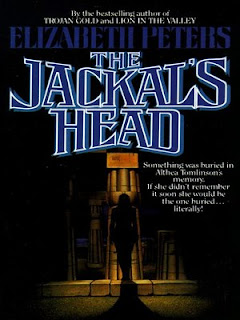
Published in 1968, The Jackal's Head is her first novel as Elizabeth Peters, and while it's rough, it's got a lot of her strengths in place. I love books with a sense of place, and Peters was great in giving life to her settings, which range from Egypt to Mexico to Scandinavia. Her books also generally involved archaeology and/or art history, topics I enjoy. And she's one of the more feminist of romantic authors as well, at least for the time. (Again, we're not in an eternal present.)
Althea Tomlinson, in need of a job, gets one accompanying a spoiled girl on a trip to Egypt. She holds back that she grew up there, the daughter of a controversial archaeologist. And as the plot proceeds, she runs into old friends and her father's colleagues, and slowly discovers that the treasure her father had claimed to have discovered is actually real, although he was forced to say it was fake. But the forces of evil are gathering....
It's nonsense, but it's slick, fun, nonsense, although it lacks polish. (Then again, I think it was only her third work of fiction. She was still developing her skills.) The denouement is a bit abrupt and I sat there for a while questioning why the villains did X when it got them nothing....but I just shrugged it off. The description of the final treasure (Spoiler: the tomb of Akhenaton and Nefertiti) is gorgeous and rings of expertise; Peter/Mertz was Egyptologist, and wrote two standard works on the subject, Temples, Tombs, and Hieroglyphs, and Red Land, Black Land.
All in all, an enjoyable entertainment. You learn a little bit from it and have a fun, exciting story. My kind of thing.

Here's another comedy-thriller, from someone who normally wrote very serious thrillers. Published in 1944, Fire will Freeze is a classic tale of an ill-assorted group of travelers stranded by a snowstorm in a ramshackle old house...I mean, really, this sort of thing had been a staple of thriller novels and films since the 20s. But Millar seems to be having fun poking fun at the genre conventions, and it works better for me than Crispin's zaniness. Millar had remarkable ability with character, and this book's humor comes mostly from character rather than zany situations. The murders are treated with tragic seriousness, and the menace is always real. When murders start to happen, the reactions are plausible...for the most part, and the rationale behind it all is realistic. The characters are all drawn well, and the chilly confines of the house are truly menacing as the travelers, all driven by a distrust of each other, try to make sense of the bizarre situation they're in.
It's a fun read, and would be good for a cold snowy afternoon this winter, I'd guess. You can pretend to be an in an old-dark-house mystery of your own...
So, pick your favorite of the three...one wasn't for me, but I enjoyed the others.
So...here's a sampling of some of the stuff I've read lately...

I've heard so many people praise Edmund Crispin to the rafters, and I heard a review of this that made it sound intriguing, so I finally picked up a copy. I have to say it....I wasn't impressed. This isn't quite the puzzle mystery I was hoping for, more of a thriller, and it's full of self-referential humor and meta-zaniness that I find offputting. A man, wandering lost in town one night, enters a toy store that's mysteriously open, and finds a dead body. When he tries to go back with the police the next day...the body is not only gone, but the building is now a grocery store. What's going on? Well, it's a fairly complex story, and not very plausible, but at least it keeps moving. There's a lot of comical goings-on, a car chase, and other crazy stuff, but after a while I was almost screaming for the book to get to the point. (I had a similar problem with Charlotte McLeod as her series ran on, and devoted more time to comical zaniness than to things like story, plot, and character, to the point I walked away from her works, gave away the ones I owned, and wasn't even aware when she died from Alzheimer's.)
Edmund Crispin was really Robert Bruce Montgomery, a noted composer of film music. He died in 1978, but all his mystery novels were written in the 40s and 50s. He apparently had some serious drinking problems that got in the way of his writing, which is too bad. But while his style certainly wasn't for me, he still has fans galore, so don't let that stop you if you want to check it out. It's not a bad book, per se, just not for me.

Elizabeth Peters (real name: Elizabeth Mertz, and she also wrote as Barbara Michaels) was a friend of mine. I would hang out with her at Malice Domestic and occasionally when she did book signings near me, and I was stricken when I got news that she had passed away some years ago. Although her works are technically "romantic suspense", I enjoy them, because let's be honest....sometimes the difference between being classed as "romantic suspense" and a regular "mystery" or "thriller" or "spy novel" is the sex of the author. Really...read some Helen MacInnes and Robert Ludlum back-to-back. They're in the same style with similar content, but MacInnes' work was always classed as "romantic suspense" because she was a woman. Like how Mary Renault's historical novels of ancient Greece would be stocked as "romance" because...well....the obvious reason. OK, I'll stop ranting...
Published in 1968, The Jackal's Head is her first novel as Elizabeth Peters, and while it's rough, it's got a lot of her strengths in place. I love books with a sense of place, and Peters was great in giving life to her settings, which range from Egypt to Mexico to Scandinavia. Her books also generally involved archaeology and/or art history, topics I enjoy. And she's one of the more feminist of romantic authors as well, at least for the time. (Again, we're not in an eternal present.)
Althea Tomlinson, in need of a job, gets one accompanying a spoiled girl on a trip to Egypt. She holds back that she grew up there, the daughter of a controversial archaeologist. And as the plot proceeds, she runs into old friends and her father's colleagues, and slowly discovers that the treasure her father had claimed to have discovered is actually real, although he was forced to say it was fake. But the forces of evil are gathering....
It's nonsense, but it's slick, fun, nonsense, although it lacks polish. (Then again, I think it was only her third work of fiction. She was still developing her skills.) The denouement is a bit abrupt and I sat there for a while questioning why the villains did X when it got them nothing....but I just shrugged it off. The description of the final treasure (Spoiler: the tomb of Akhenaton and Nefertiti) is gorgeous and rings of expertise; Peter/Mertz was Egyptologist, and wrote two standard works on the subject, Temples, Tombs, and Hieroglyphs, and Red Land, Black Land.
All in all, an enjoyable entertainment. You learn a little bit from it and have a fun, exciting story. My kind of thing.

Here's another comedy-thriller, from someone who normally wrote very serious thrillers. Published in 1944, Fire will Freeze is a classic tale of an ill-assorted group of travelers stranded by a snowstorm in a ramshackle old house...I mean, really, this sort of thing had been a staple of thriller novels and films since the 20s. But Millar seems to be having fun poking fun at the genre conventions, and it works better for me than Crispin's zaniness. Millar had remarkable ability with character, and this book's humor comes mostly from character rather than zany situations. The murders are treated with tragic seriousness, and the menace is always real. When murders start to happen, the reactions are plausible...for the most part, and the rationale behind it all is realistic. The characters are all drawn well, and the chilly confines of the house are truly menacing as the travelers, all driven by a distrust of each other, try to make sense of the bizarre situation they're in.
It's a fun read, and would be good for a cold snowy afternoon this winter, I'd guess. You can pretend to be an in an old-dark-house mystery of your own...
So, pick your favorite of the three...one wasn't for me, but I enjoyed the others.
Wednesday, September 12, 2018
A September Night at the Phantom Concert Hall

Isn't it great? One of those lovely pieces that flies under the radar. I love finding these obscure little gems.
Sorry to be late with this and not posting for a while. My elderly mother took a fall and broke both her shoulder and hip, and my sister and her husband have moved cross-country to Seattle. I had to be on hand when Mom underwent surgery and helping arrange for assistance while she's in a rehab facility. And then Mom decided she couldn't take care of her cat any longer so she had him surrendered to a local shelter, which upset me quite a bit as he's 10 years old and shelters have problems adopting out older cats. And I haven't talked about this on the blog, but over the summer I was hit by an unexpected depression and I went into therapy. I'm slowly coming out of it but it's taking a while, as it usually does.
So, the past couple months have been difficult, to say the least, and while I slowly get my groove back, bit by bit,I hope to get back to regular posting.
Sunday, August 26, 2018
THE HORROR CHAMBERS OF JULES DE GRANDIN by Seabury Quinn

Seabury Quinn apparently was a bit of a progressive in some ways, as you may have seen from my previous reviews of his works. He's sympathetic to minorities (sometimes) and some of his stories have centered on sexuality. And that continues here...
"The Gods of East and West" concerns a woman under the influence of an idol of Kali, and de Grandin, not able to help her out himself....so he brings in a Native American shaman to exorcise the spirit. The story leaves one with an odd feeling; Quinn may have been trying to be pro-Indian but at the same time it comes across as a sort of fetishization of the Noble Savage sort of thing. A strange story.
"The Poltergeist" has another young woman be the center of poltergeist activity. It turns out to be the work of a ghost, namely that of another woman who was plainly a lesbian and in love with the living woman, and who is now jealous of her upcoming marriage. OK, kinda homophobic, to be sure, but that's pretty much to be expected from a story written in 1927.
The story after that, "The House of Golden Masks," is a non-supernatural tale of white slavery. But after that is an eyebrow-raiser, "The Jest of Warburg Tantavul." A young couple are being tormented by the vengeful ghost of the husband's guardian, an eerie phantom whose malice is palpable and who is handled memorably...and even dispatched in a rather modern way. But the thrust of the story, that the man in life had sought revenge on someone else through the couple, is made clear when the reader realizes (and is finally revealed) that the couple are unknowingly brother and sister. And at the end, de Grandin remains silent, seeing that they are happy together. A weird way of ending a tale, and definitely not something that would work today, but oddly compassionate.
"Stealthy Death" is another non-supernatural tale, but with a weird element. A series of people are murdered, and a strangely beautiful but robotic woman keeps cropping up. Who is responsible and why? It turns out the murderer is a Hindu man avenging his sister, who was seduced, robbed, and sold into prostitution by an American missionary. The man's deeds are heinous but it's clear that he has a legitimate gripe.
The final story, "A Gamble in Souls," is a weird sort of tale in which the soul of a man being unjustly executed is put into the body of his evil twin brother. Again, we have some exoticism here as a Middle Eastern "philosopher" is brought in to effect the changeover. It's progressive in a tiny way, but also dripping with pulp-fiction nonsense.
So...are these good? Well, they're fun, to be honest. I'm probably being a little unfair as my modern eyes and modern sensibilities aren't the target audience. It's important to remember the times in which something was written, and the audience it was intended for, when reading older works. We don't live in an eternal present. And while the exaggerated exoticism that goes on in these tales may seem cheap and offensive to many readers today, at the time this was exciting and novel to many American readers. And also, Quinn introduces elements that rouse the reader's sympathy, in taking a brief look into the evils of imperialism in "Stealthy Death" or introducing powerful minority sorcerers in "The Gods of East and West" and "A Gamble in Souls." Even the homicidal lesbian spirit in "The Poltergeist" would at least introduce the concept to people who might not have even been aware such people existed. (And let's be honest...we're in an age now where we can acknowledge that LGBTQ people are just as capable of being dark and twisted as anyone else...) So, really, the fun is in the chills, and there are chills to be had, especially in "The Jest of Warburg Tantavul" which is one of the more dark and twisted pulp tales outside of the exploitative "weird menace" genre. This is pulpy fun and recommended if you can get into the mindset.
Sunday, August 12, 2018
A Steamy August Night at the Phantom Concert Hall

"The Three-Cornered Hat"is actually a ballet, a rarity for its time for working mainly with traditional Spanish styles of dance, rather than classical ballet. But there days, it's mostly known as a concert piece. I love the use of castanets and all the ways in which the music disdains the conventions of the normal Western classical tradition, while at the same time being an exceptionally lovely piece on its own.
Let's have a drink after, shall we?
Sunday, July 29, 2018
THE EXTRAORDINARY ADVENTURES OF ARSENE LUPIN, GENTLEMAN-BURGLAR by Maurice Leblanc

First published in 1905 (and now public domain) this sets the standard. Sure, other sympathetic crooks were around before. most notably A. J. Raffles, but Lupin was much better written and simply more fun. The stories were originally published in the magazine "Je sais tout," starting in July of 1905 (113 years ago!) and grew to encompass 24 novels and short-story collections. I want to read as many as I can.
I mean, how can I resist a burglar who leaves a note in a noble's home, reading, "Arsene Lupin, Gentleman-Burglar, will return when the furniture is genuine"? On one hand, it's almost a parody of the snobbish criminal who won't stain his hands with reproductions....but it's also a blast at the vulgar wealthy who try to maintain an appearance of taste and culture. I get a sense that Lupin wouldn't have mocked him if the noble had been more honest about himself.
So, to run down...
The first three stories make a trilogy. "The Arrest of Arsene Lupin" introduces the character and has him sneaking aboard a cruise ship from France to America, and also makes it clear that he's got a weakness for beautiful women. (But of course....) "Arsene Lupin in Prison" has him announcing a daring burglary while in prison, and actually pulling it off despite everyone's doubts. "The Escape of Arsene Lupin" has one of the more amusing, and more complicated, prison-escape plots I've ever seen, and makes for zesty reading.
"The Mysterious Traveler" is a first-person story from Lupin's viewpoint, in which he captures a murderer on a train. "The Queen's Necklace" is intriguing as it gives us a potential origin story for Lupin, and has him committing dashing thefts even as a child.
"The Seven of Hearts" is one of my favorites, as it introduces us to a narrator (presumably Leblanc himself) who tells of how he first met Lupin, and also gives us a bizarre and intriguing mystery with Gothic overtones. Who's breaking into the journalist's apartment? What are they seeking? What's the meaning of the playing card poked full of holes?
In "Madame Imbert's Safe," Lupin meets his match in a pair of con artists. "The Black Pearl" has him starting on a daring jewel robbery....only to find himself in the middle of a murder. And the last story, "Sherlock Holmes Arrives Too Late" is perhaps one of the more interesting of the bunch, in that it's good and early example of the literary crossover, in having Lupin go toe-to-toe with the Great Detective himself. There were copyright issues, though, and in future appearances he showed up as Herlock Sholmes, fooling nobody but appeasing the law. Imagine...all that crossover fanfic on the web has a legit source...
This is an excellent read, and on the Required Reading shelf. This is available in cheap editions, and can be downloaded for free from the 'net. There are also good audio versions available. "The Classic Tales" podcast did a version a while back that may still be available. You owe it to yourself to become acquainted with Arsene Lupin. Go do it now.
Subscribe to:
Posts (Atom)