Showing posts with label Montague Summers. Show all posts

Thursday, May 14, 2009

Montague Summers' THE SUPERNATURAL OMNIBUS, Part 2


Well, I finally, finally finished Summers' monumental anthology. And a problem I noted in the first part, how Rosa Mulholland's "Not to be Taken at Bed-Time" was out of place in the ghost stories section, has now been explained. It seems there's been some sort of editorial error, although I'm not sure if it's Summers' fault or some later hack's work. Because in the second part, "Diabolism, Witchcraft, and Evil Lore," there's a story that's supposed to demonstrate "Witchcraft," but the story is Amelia Edwards' "My Brother's Ghost Story," a nice enough tale, but it has nothing to do with witchcraft. It looks like, somehow, the two stories were switched. It's actually a rather glaring error, and I'd like to know at whose feet I should be laying the blame.

Anyway, like the first part, I skipped a few stories. Here's the list of the ones I skipped:

"Singular Passage in the Life of the Late Henry Harris, Doctor in Divinity," by Richard Barham, is being saved for later, when I review some sections from THE INGOLDSBY LEGENDS.
"Carmilla," by J. Sheridan le Fanu, is also being saved for later; I want to review this landmark work on its own, and take my time with it.
"The Story of Konnor Old House" by Kate and Hesketh Prichard is being saved for when I review all their Flaxman Low stories at once.

So, for the ones I did read...

"The Spirit of Stonehenge" by Jasper John. I expected something lurid and horrific, and was a little let down. It's basically a tale of an archaeologist who falls under the spell of the "elementals" of Stonehenge, and eventually dies there. There's more hinted at than actually happening, which is fairly frustrating.

The next story is also by Jasper John, "The Seeker of Souls." This is an oddly abbreviated tale that feels as if it could have been much longer, had J.J. put some effort into it. As it is, it's a not-bad tale of a castle in Ireland under a curse, and of a couple of bloody deaths. The most interesting thing is that it starts off almost mid-story, with the narrator awaiting the hour when some evil thing will walk the halls of the castle. Sounds a lot more shuddersome than it is; it could have been better.

Next up was a tale by Roger Pater, who had a story in the first half. "The Astrologer's Legacy" is told all in flashback, with little actually happening in the "present" of the story, but it's still interesting. Part of Pater's cycle of tales in which a Catholic priest encounters supernatural doings, it has the hero at a lavish dinner party and inspecting an odd piece of silver. It turns out to have an unhealthy fascination for one of the party, and turns out to have a past associated with a secret cult of Satanists. Despite the rather distant nature of the tale, it's still halfway interesting.

Next was J. Sheridan le Fanu's "Sir Dominick's Bargain," a sardonic tale of an impoverished Irish noble who strikes a deal with the devil for limitless riches. This is a popular tale that's been anthologized often, and dramatized a few times for radio, but it's jolly good fun, with a satisfying final twist and enough gruesomeness to keep it from seeming too proper and twee. Of course, it's le Fanu, how can you go wrong?

Another story of an evil bargain, "The Bargain of Rupert Orange" by Vincent O'Sullivan, is adequate, I'd have to say. (Nothing I've read of O'Sullivan measures up to "When I was Dead," which makes me wonder.) This is another tale of an impoverished young man who makes a deal...but is it the devil? Is it really a deal? It's all so oblique...you can see the thematic treatment of the deal-with-the-devil, but there's precious little brimstone to be sniffed here. In fact, from my reading of it, what goes on could be explained by mere chance, the fleeting nature of fame, and self-destructive personalities. All well and good in their place, but this ain't the place.

"The White Wolf of the Hartz Mountains" by Frederick Marryat (an excerpt from his novel THE PHANTOM SHIP) does duty as the collection's example of lycanthropy. It's actually quite enjoyable. A nobleman, on the run with three children, ends up falling in love with a mysterious woman and marrying her. Of course, she frightens the children so, and finally they figure out that she's a werewolf. But there's blood to be shed before it's all over, and (surprisingly) a curse that needs to be played out before it's all over. Actually, not a bad story at all, and dripping with gothic atmosphere.

And next up is more Roger Pater! "A Porta Inferi" is a tale of possession. It pretty much drops the ball when dealing with how the possession occurred or why, BUT...its depiction of a man possessed is compelling. I don't believe in such things, but if they did happen, Pater's story would be a great diagnostic tool. (Makes me wonder if that wasn't the intent.) There's a collection of Pater's Catholic-themed stories out there; I may have to find one, because he's turning out to be an interesting voice in the field of supernatural fiction.

Richard Barham's "Jerry Jarvis' Wig" tells how a cloddish working-class man commits a horrible crime under the influence of a castoff wig. Yes, a wig. Ghost stories are inherently absurd, but this pushes the envelope, and it may have been intended that way. Still, it's overloaded with antiquated language, and is hard going. Not recommended.

Another problem was John Guinan's "The Watcher O' the Dead," which is full of Irish dialect and vague plotting. It has something to do with someone taking the place of a soul doomed to wander a cemetery until doomsday...but the story, published in the 20s, hasn't aged well.

Finally, "Toussel's Pale Bride" by W. B. Seabrook ends the collection. Taken from a book called THE MAGIC ISLAND, it's a straightforward tale of a mixed-race girl who marries an Afro-Carib planter, and who is driven mad on the night of her first anniversary by a quite gruesome experience. Meant to represent "Voodoo," there actual zilch in the way of voodoo practices, but the final gruesome scene seems more like something from a serial-killer story than horror. The story has a journalistic flair to it, and I wonder if it's not meant to depict real events, or masquerade as true events. Hard to say. I may have to hunt down that book.

So, that's it for Summers. He had odd tastes, that's for sure, but some of the stories were loads of fun, and at least it brought Roger Pater to my notice.

I've got a few books to read next, but soon, if not right up next, I'll be doing another anthology, GASLIGHT GRIMOIRE, subtitled "Fantastic Tales of Sherlock Holmes," and co-edited by Dust & Corruption fan Charles Prepolec. Yeah, I owe him that much, at least.

Till next time, my darlings....enjoy your springtime.

Tuesday, April 28, 2009

Montague Summers' THE SUPERNATURAL OMNIBUS, Part One

This will be a multi-part review, because there's so much here to cover...


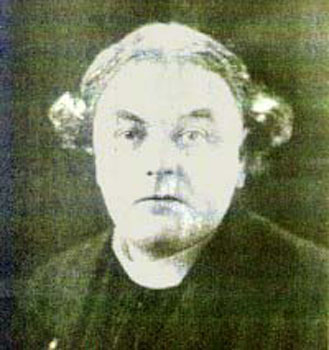
Montague Summers is one of those rare pieces of work that only come around every hundred years or so. Born in 1880 to affluent parents, he studied to be an Anglican curate, then shifted into teaching and writing, then converted to Catholicism and dubbed himself "Reverend" although sources conflict as to whether he was ever truly ordained. He was most famous for his works on occultism, witchcraft (including the first English translation of the MALLEUS MALEFICARUM) vampires, werewolves, and gothic literature. He was also known for his self-conscious eccentricity, going about in black priest's robes, soft fingers dripping with jeweled rings, clutching a huge black portfolio with "VAMPIRES" etched on the side in huge red letters. He purported to believe in everything he wrote about, and claimed that all witchcraft was evil. Nevertheless, he was rumored to have been friends with Aleister Crowley, to have participated in occult rituals, and to have been gay and/or a pederast. (That photo makes him look like someone's Aunt Gertrude, but never mind.) He's just one of those folks you're never sure what to make of.

Anyway, THE SUPERNATURAL OMNIBUS is his personal selection of significant stories, and they reflect him in many ways. I managed to get hold of a "complete" edition, which included a number of stories that weren't reprinted in American editions for many years.

Summers' introduction is rather interesting; he's simultaneously erudite and smirking, taking a wryly humorous overview of the development of the ghost story in literature, from ancient times to medieval manuscripts to modern times. There are moments when his tongue seems so firmly in cheek that I was left wondering just how genuine all his belief truly was...but I guess we'll never know for sure. He drops lots of tantalizing titles of obscure gothic works that left me drooling, including THE PRIORY OF ST. CLAIR, OR, THE MURDERED NUN and THE SKELETON CLUTCH, OR, THE GOBLET OF GORE. The latter is supposedly by Thomas Preskett Prest, author of the infamous VARNEY THE VAMPYRE, OR, THE FEAST OF BLOOD, which I made all the way through a few years ago and am not particularly inclined to revisit just yet.

I jumped around a bit through the first section, "Stories of Hauntings and Horror," mainly because there were stories there I'd read too many times before, or were things I planned to read later for this blog and review on their own or as part of their author's work. So, here's a few quick mini-reviews...

"Narrative of the Ghost of a Hand," by J. Sheridan le Fanu. An excerpt from his novel THE HOUSE BY THE CHURCHYARD, this is a nifty, atmospheric little tale that strongly resembles modern stories of poltergeist hauntings.

"An Account of Some Strange Disturbances in Aungier Street," also by Le Fanu. Not quite as compact and tidy as the last one, but still an entertaining story of a haunted house that kept making me think of Bram Stoker's "The Judge's House," and led me to wonder if there was an influence there.

"Man-Size in Marble," by E. Nesbit. I skipped this one, having read it too many times before. Then there was the aforementioned "The Judge's House" by Stoker, ditto.

"Thurnley Abbey" by Perceval Landon, has one of the most gruesome ghosts I've ever encountered in literature, a mummified corpse that flops into bed with the narrator. Yuck!

"The Story of the Spaniards, Hammersmith," by Kate and Hesketh Prichard, is something I'm saving for later. Amelia Edwards' "The Phantom Coach" is an old favorite; a man lost in a snowstorm ends up catching a ride on a moldering coach. Not great, but a good story to read in winter, with loads of atmosphere.

"Brickett Bottom," by Amyas Northcote, is a chilling tale of a house that may or may not be there...and what may happen to those who chance to go in. Memorable for its ambiguity.

Mary Elizabeth Braddon's "The Cold Embrace" is a tale of spectral vengeance that I've seen a million times; same with the next tale, Amelia Edwards' "How the Third Floor Knew the Potteries."

Rosa Mulholland's "Not to Be Taken at Bed-Time" is a nasty tale that honestly doesn't belong in this section, as it deals mostly with witchcraft. Old Coll Dhu is a lonesome recluse in Ireland who finally meets the local lord's daughter and falls in love. Naturally, she spurns him, and he commissions a local witch to fashion a love charm, with appalling results.

The next two tales, "To Be Taken with a Grain of Salt," and "The Signal-Man," are by Charles Dickens, a writer I simply do not like, so I skipped them. Yes, I don't like Charles Dickens. I know that's heresy to some. Live with it.

"The Compensation House" by Charles Collins is a sad tale of a man tormented by guilt, and haunted by a friend's ghost; the next tale, Amelia Edwards' "The Engineer," is quite similar. Neither is particularly frightening; Edwards' story is unfortunately rather pious and moralistic even though it's got a better, more modern style.

"When I Was Dead" by Vincent O'Sullivan is a minor classic, a first-person narrative of a man who, well...the title says it all. He's presented with an unusual situation and refuses to accept the reality of it. Short, but it sticks with you.

"The Story of Yand Manor House" by Kate and Hesketh Prichard is something I'm saving for later. Following that was another Vincent O'Sullivan piece, "The Business of Madame Jahn," which I didn't like; for some reason, I read it twice and both times forgot almost immediately that I had read it. Either it's totally unmemorable or so hideous and traumatic that my brain is wiping out the memory automatically. My bet is on the former but you never know.

Two by Vernon Lee, "Amour Dure" and "Oke of Okehurst," are being saved for later. Braddon's "Eveline's Visitant," a tale of spectral revenge with hints of marital infidelity, is another overly familiar tale; same is true of "John Charrington's Wedding" by E. Nesbit, which is quite good, but anthologized often.

Roger Pater's "De Profundis" is an interesting tale, told from the viewpoint of a Catholic priest with clairaudient abilities, who I'm told was the star of a series of stories. It's not that brilliant a tale (the ghost of a nun accidentally reveals some unorthodox practices in a convent), but the milieu is interesting, and I may see if there's a reprint out there somewhere.

Winding up the first section is Wilkie Collins' "The Dream Woman," one of those classic tales of fate foretold by a prophetic dream. Hardly anything new, but Collins could tell a tale.

OK...I'll be starting the second part, "Diabolism, Witchcraft, and Evil Lore," which has a lot of tales I've never heard of, so I'm looking forward to it. Oh, but it has le Fanu's "Carmilla," another one that's been anthologized to death, but hopefully I'll be able to examine it by itself some day.

So that's all for the moment...stay tuned for Part Two!